


Living roots
 Traditions of the Basque Country
 Traditions of the Basque Country
Staying at our campsite in the Basque Country means immersing yourself in a thousand-year-old culture with vibrant traditions. The Basque Country and its traditions fascinate visitors from around the world with their authenticity and vitality. Here, language, sports, crafts and festivities punctuate daily life and bear witness to a deep-rooted attachment to the collective heritage. To discover Basque traditions is to understand the soul of a people proud of its identity.
The Basque language
Euskara, the Basque language, is the common element that unites the inhabitants of the seven provinces of the Basque Country. This mysterious language, considered to be the oldest in Western Europe still spoken, is unlike any other. Its origins probably date back to prehistoric times, and it remains a fascinating subject of research for linguists.
The rural character of the Basque Country and the role of the Church have contributed to the preservation of this unique language. It operates according to a different logic from French: suffixes attach to words and the grammatical structure is agglutinative. There are seven ways of speaking Basque, corresponding to the seven provinces. To facilitate exchanges, a unified Basque called “batua” was created in 1968 at the Arantzazu congress by the Academy of the Basque Language.
Today, Euskara is alive and well: double signage on road signs, bilingual posters, conversations in markets. The ikastolak, Basque immersion schools, pass on the language to new generations. Every year, the Korrika, an 11-day, 10-night relay race across the seven provinces, mobilizes thousands of runners to promote the Basque language.
Ikurriña – The Basque flag
Ikurriña, created in 1894, flies proudly in village squares and at every festival. Its symbolism is rich: the red background represents the Basque people, the green St. Andrew’s cross, the same color as the oak of Guernica, symbolizes the ancestral law that governs the community. The superimposed white cross recalls that the Catholic faith has long structured Basque society.
The flag dance, or Ikurrin dantza, is one of the most emblematic dances. The dancers wave the ikurriña above their heads in a graceful movement that traditionally opens folk performances.
Lauburu – The Basque cross
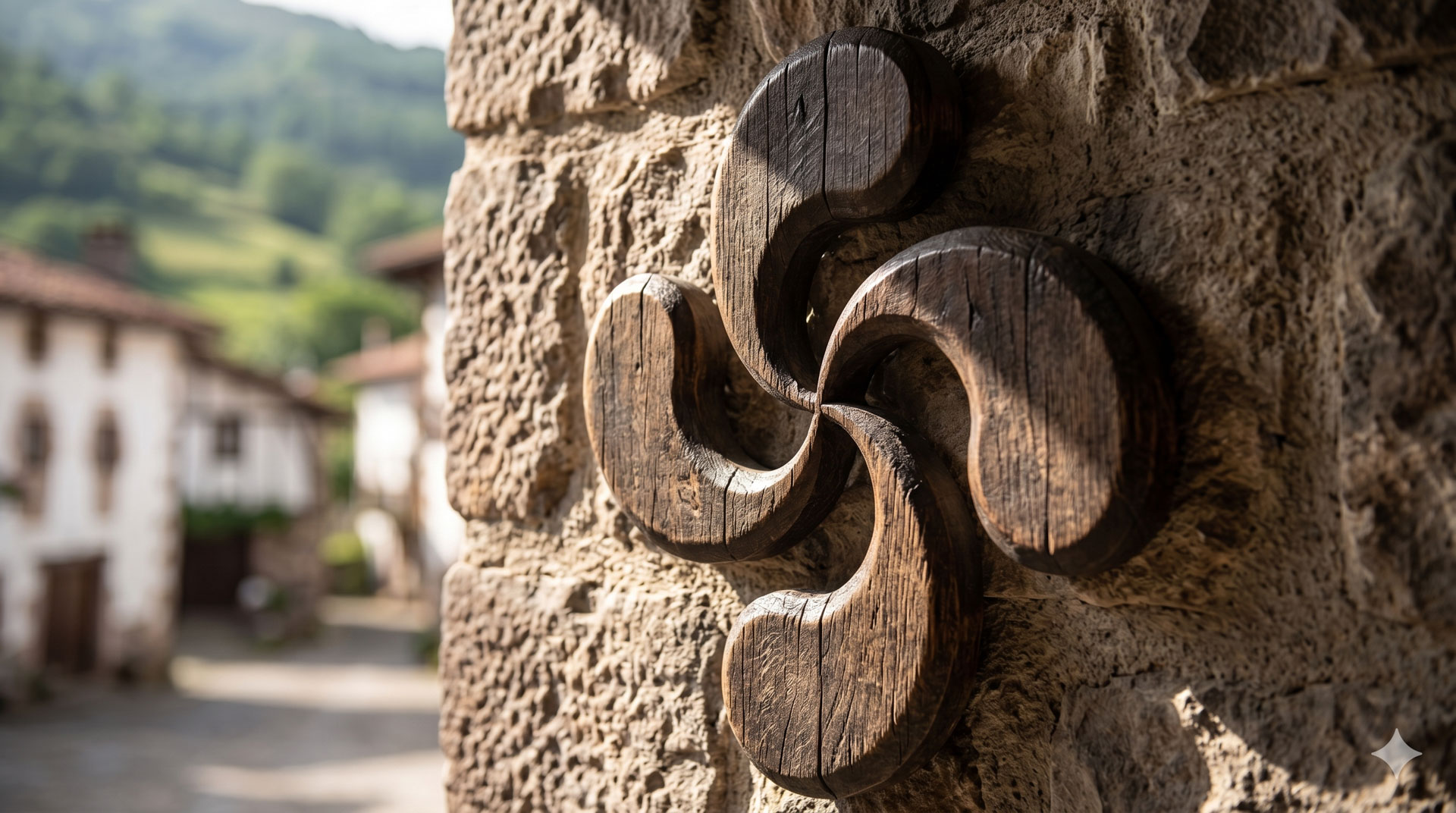
Lauburu decorates house facades, sculpted lintels and grave markers in Basque cemeteries. Its name means “four heads” in Euskara. This solar symbol with curved branches evokes the perpetual movement of the sun and of life. It can be found carved in the stone of Romanesque churches as well as on contemporary craft objects, bearing witness to the continuity of traditions.
The beret
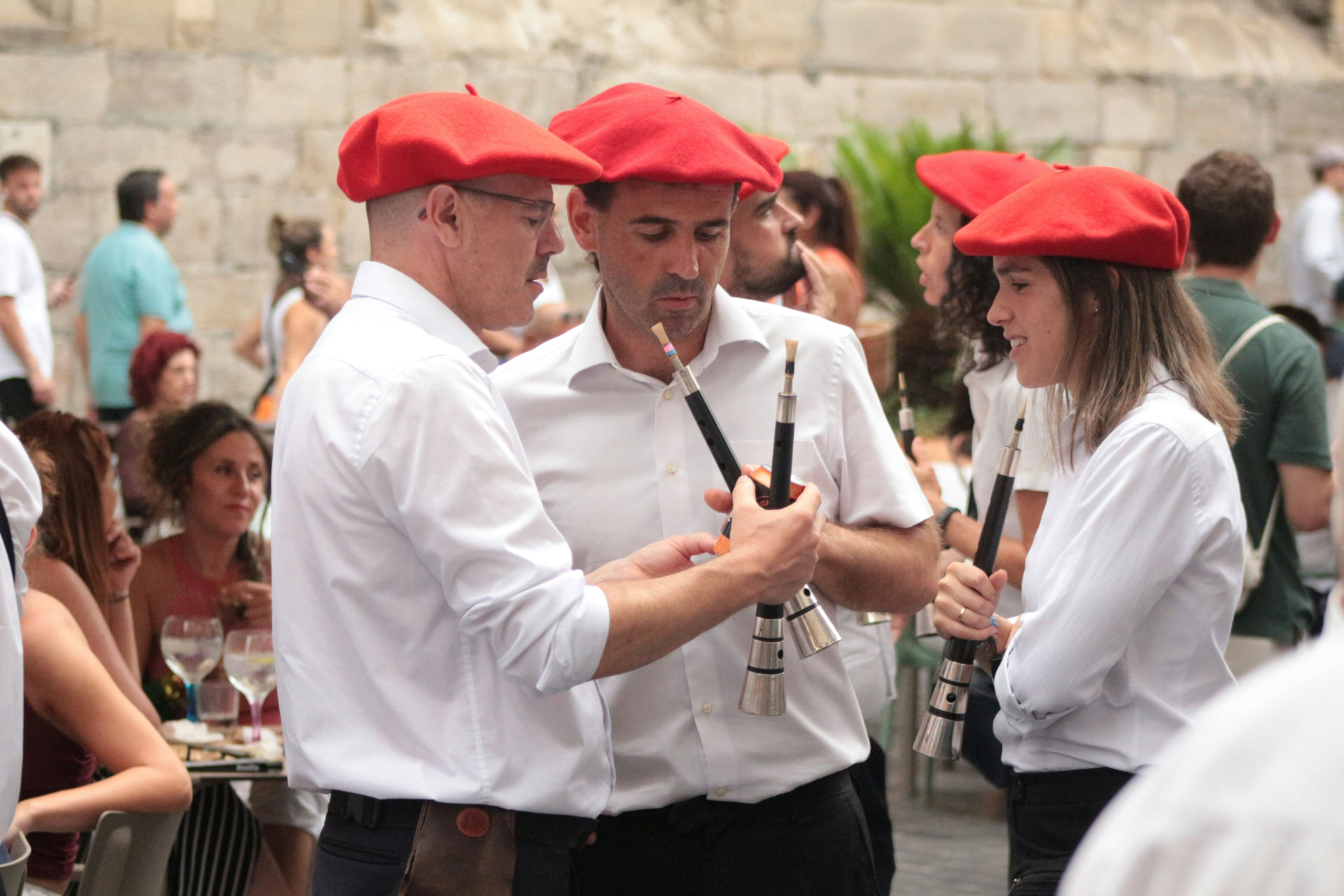
Emblematic headwear of the Southwest, the beret originates from neighboring Béarn. Appearing in the 15th century, it was made by shepherds from the wool of their flocks. Practical and hard-wearing, it protects against both sun and rain. Even today, old-timers wear them every day, while young people wear them at village festivals, perpetuating this clothing tradition.
Le Makila
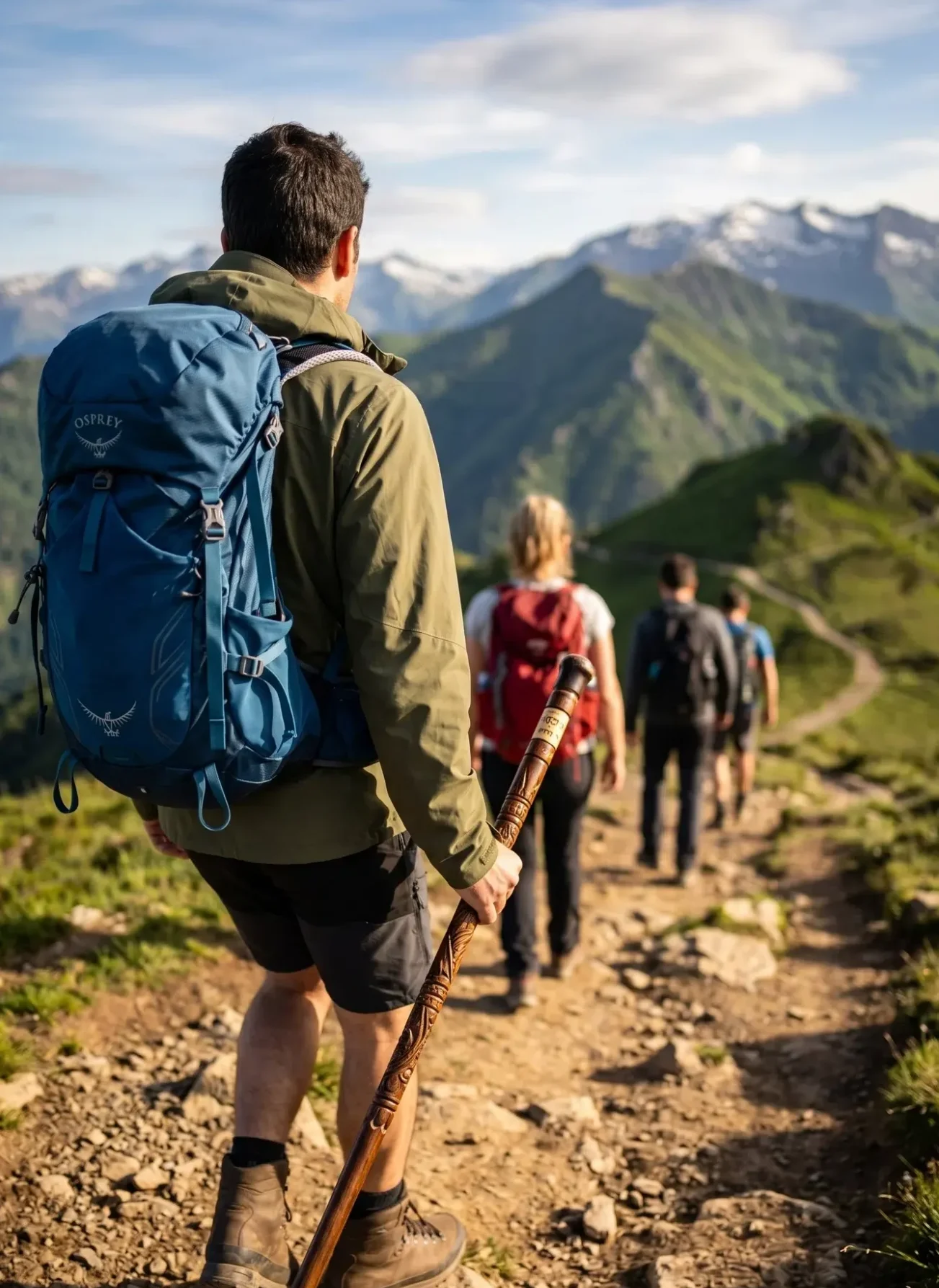
An emblematic object of the Basque Country, makila is much more than a simple walking stick. This short stick, perfectly suited to mountain trails, conceals a steel tip in its handle that makes it a defensive weapon. Traditionally made from medlar wood and scarified several years before cutting, makila is engraved with personalized motifs and the owner’s name. Passed down from generation to generation, makilas are offered to mark special occasions.
The great games of Basque strength
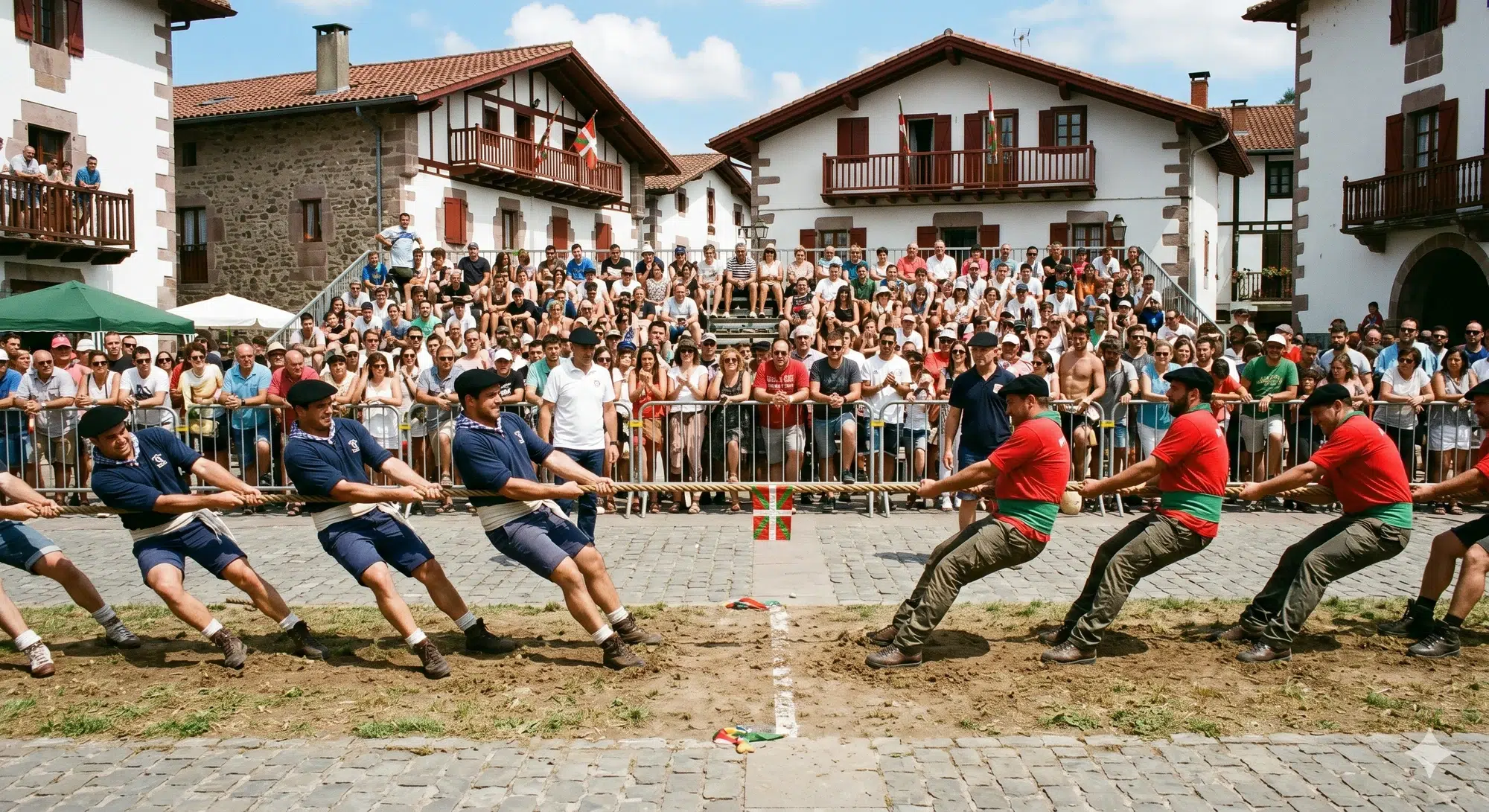
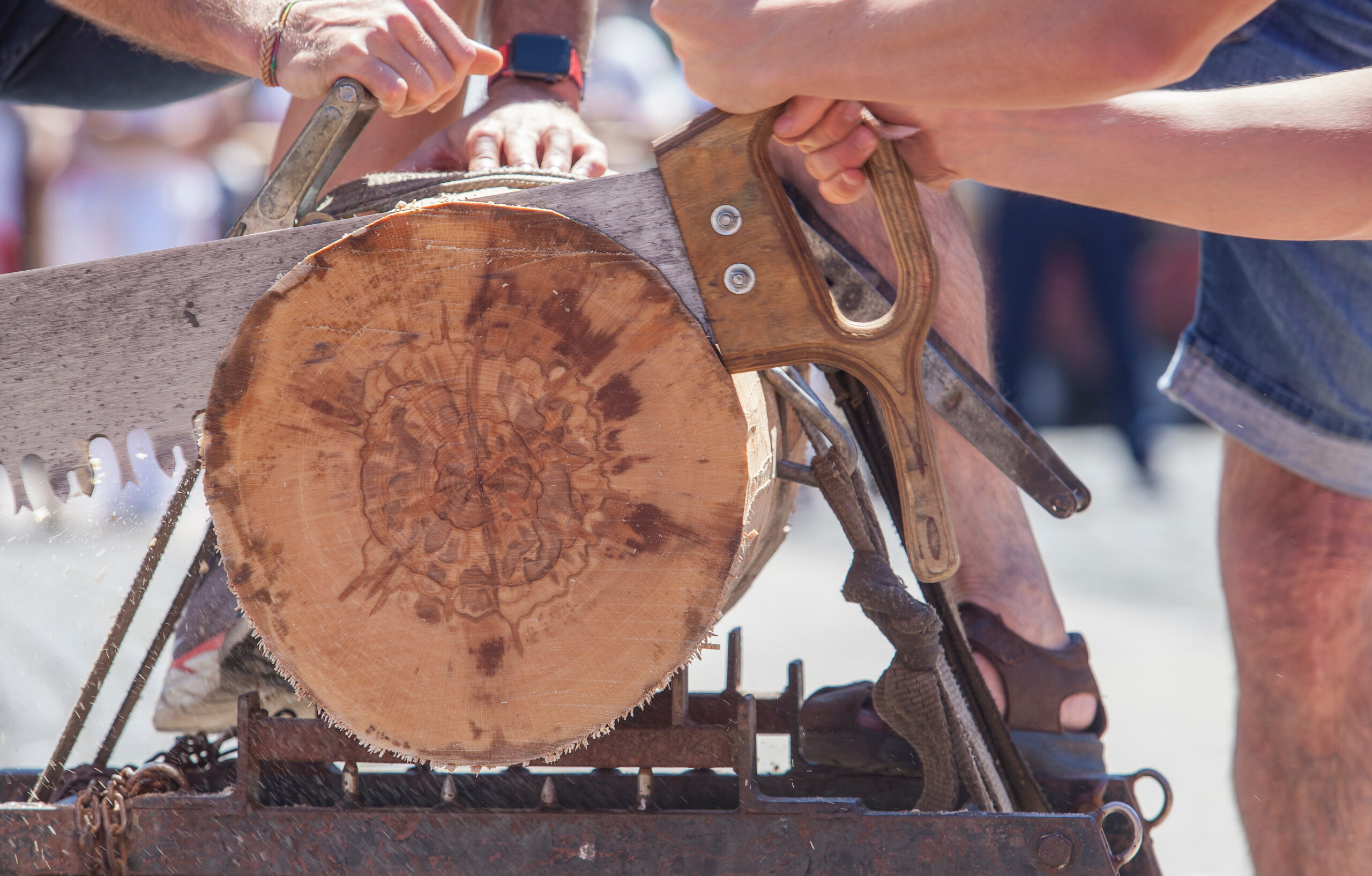
Basque strength events, or Herri Kirolak, are deeply rooted in local culture. For centuries, young Basques challenged each other from one farm to another, transforming agricultural work into spectacular competitions. Sixteen disciplines are now officially recognized, including stone lifting (Harrijasotze), tug-of-war (Soka Tira), wood chopping with an axe (Aizkolariak), hay bale tossing and the milk pot race.
Each village has its own team, and when the weather’s fine, there are plenty of jousting matches between neighboring villages. The most important event takes place every August 15 in Saint-Palais. All summer long, demonstrations are organized during the local festivals, offering visitors an impressive show of power and technique.
Basque pelota
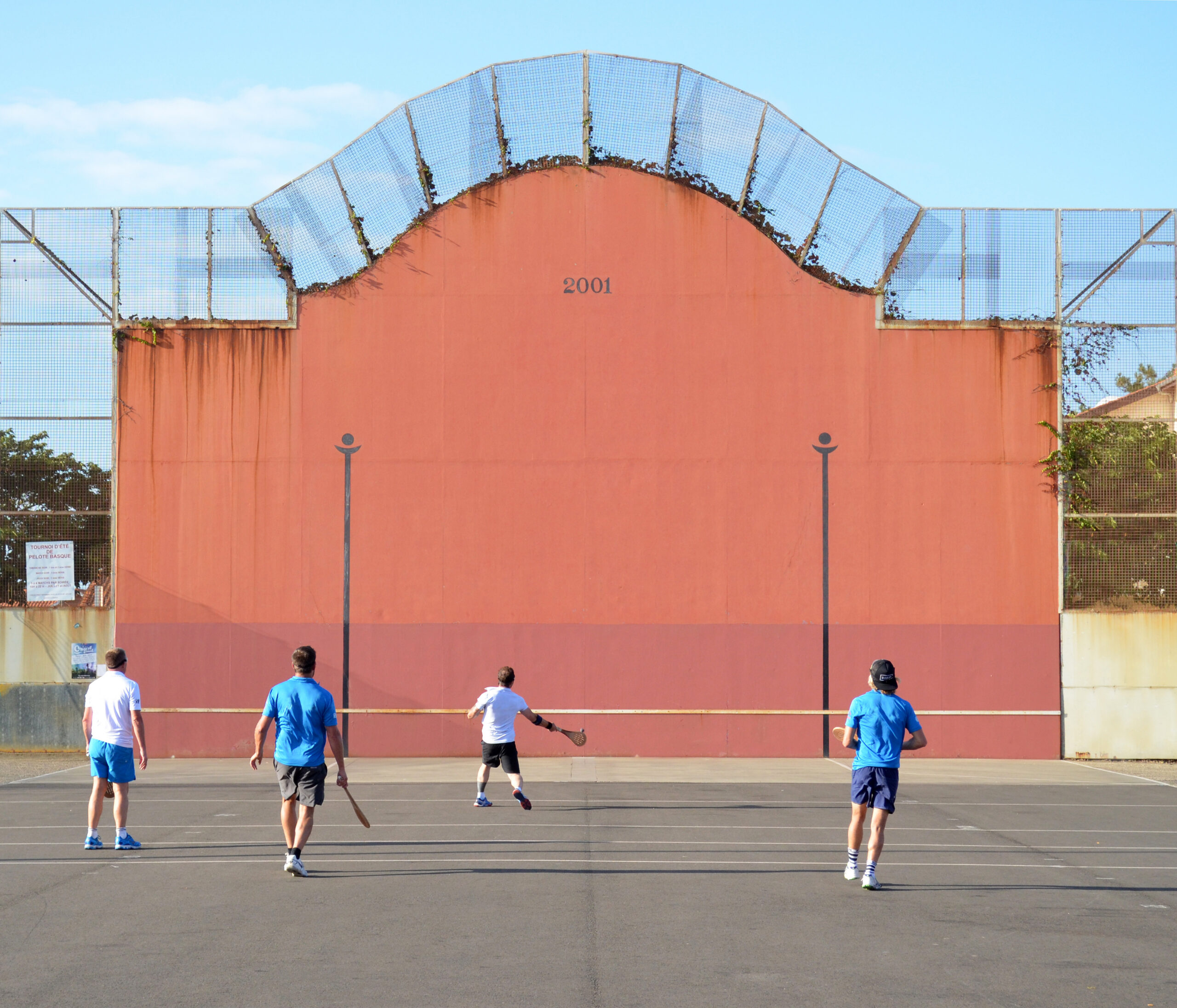
Basque pelota, the region’s emblematic sport, is played on the frontons found in every village. This game requires strength, skill, agility and “vista” (sharp eye). There are many variants: played bare-handed, a demanding and painful ancestral discipline, with a chistera (wicker basket attached to the hand by a leather glove), a pala (solid wooden racket) or in cesta punta, the most spectacular form.
The pelotaris pass the ball back and forth to each other by hitting the wall called the frontis. The ball must fall back onto the playing area, the cancha, and the point ends when one team commits a foul or fails to rebound before the second rebound. Since April 1997, a decree has authorized betting on Basque pelota games, as in Spain and the United States.
To find out more about this sport, visit a fronton during the summer or the Écomusée de la Pelote basque et du Xistera in Saint-Pée-sur-Nivelle.
Basque songs and dances
Singing has been an integral part of Basque culture for over 1,200 years. Men’s choirs accompany every major occasion: weddings, meals, masses. Bertsolaritza, the art of sung poetic improvisation, features verbal jousting in which artists compete in creativity and repartee on given themes.
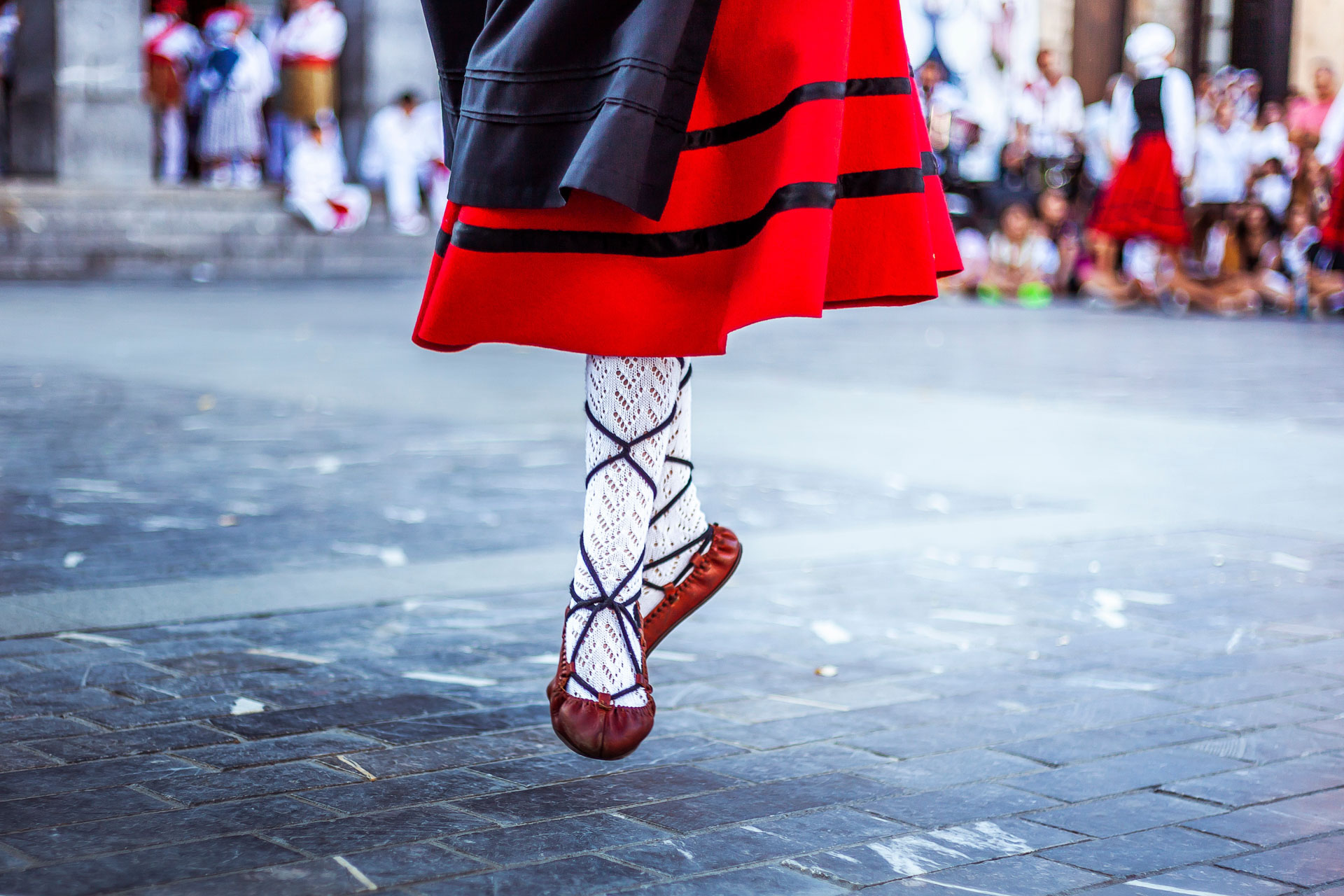
The Basques have preserved a rich repertoire of traditional dances: fandango and arin-arin express the joy of living, mutxiko (Basque jumps) bring dancers together in a circle, and Agurra pays tribute to personalities. Dance accompanies every stage of life and every celebration, handed down from generation to generation at the mutxiko held in village squares.
Basque festivals
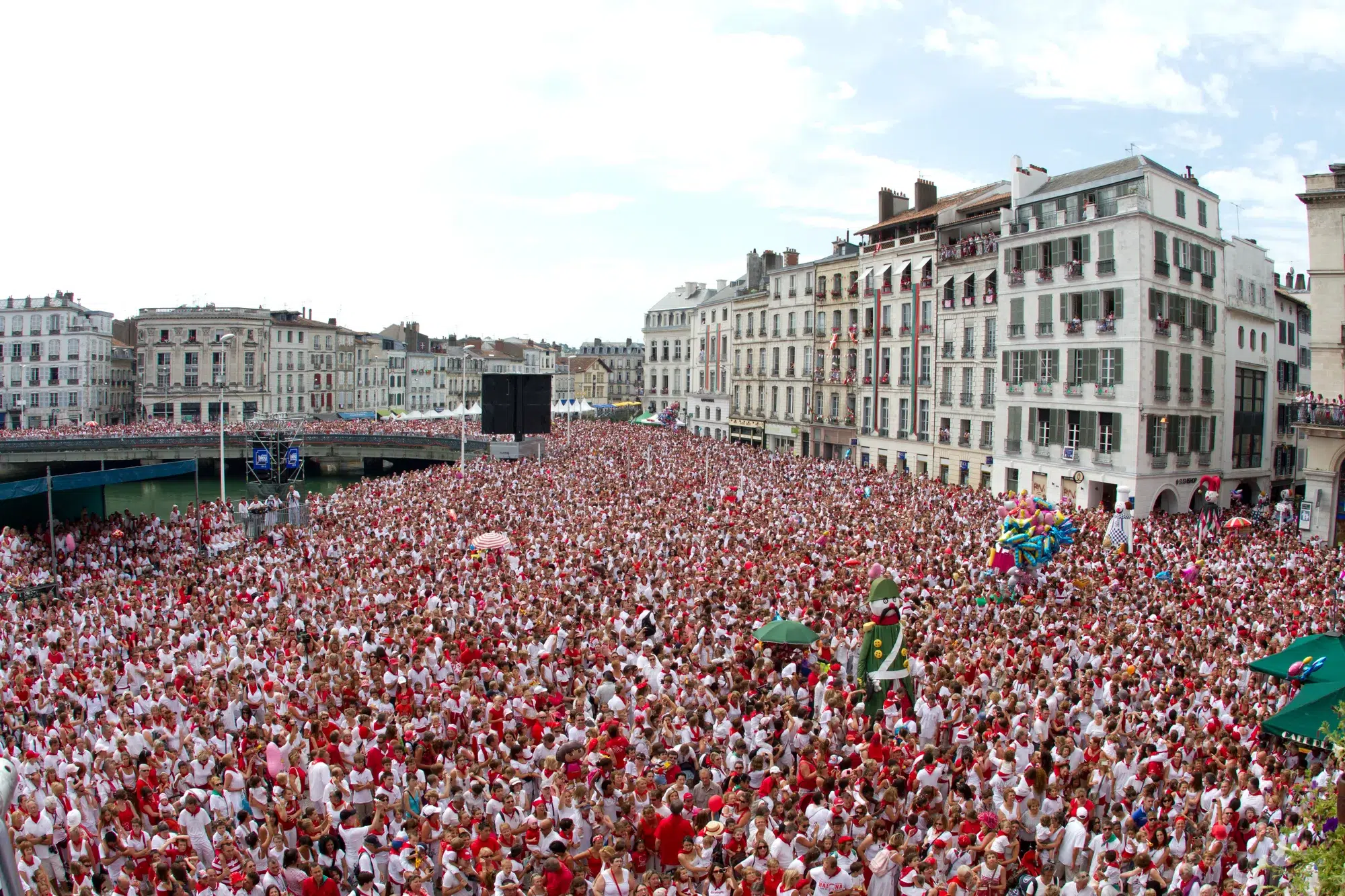
Any excuse is good for a celebration in the Basque Country! Each village celebrates its patron saint’s festival with an unchanging program: solemn mass, pelota matches, Basque strength demonstrations, traditional dances, shared meals and concerts. The Fêtes de Bayonne, every summer, bring together thousands of people dressed in white and red to the rhythm of the bandas.
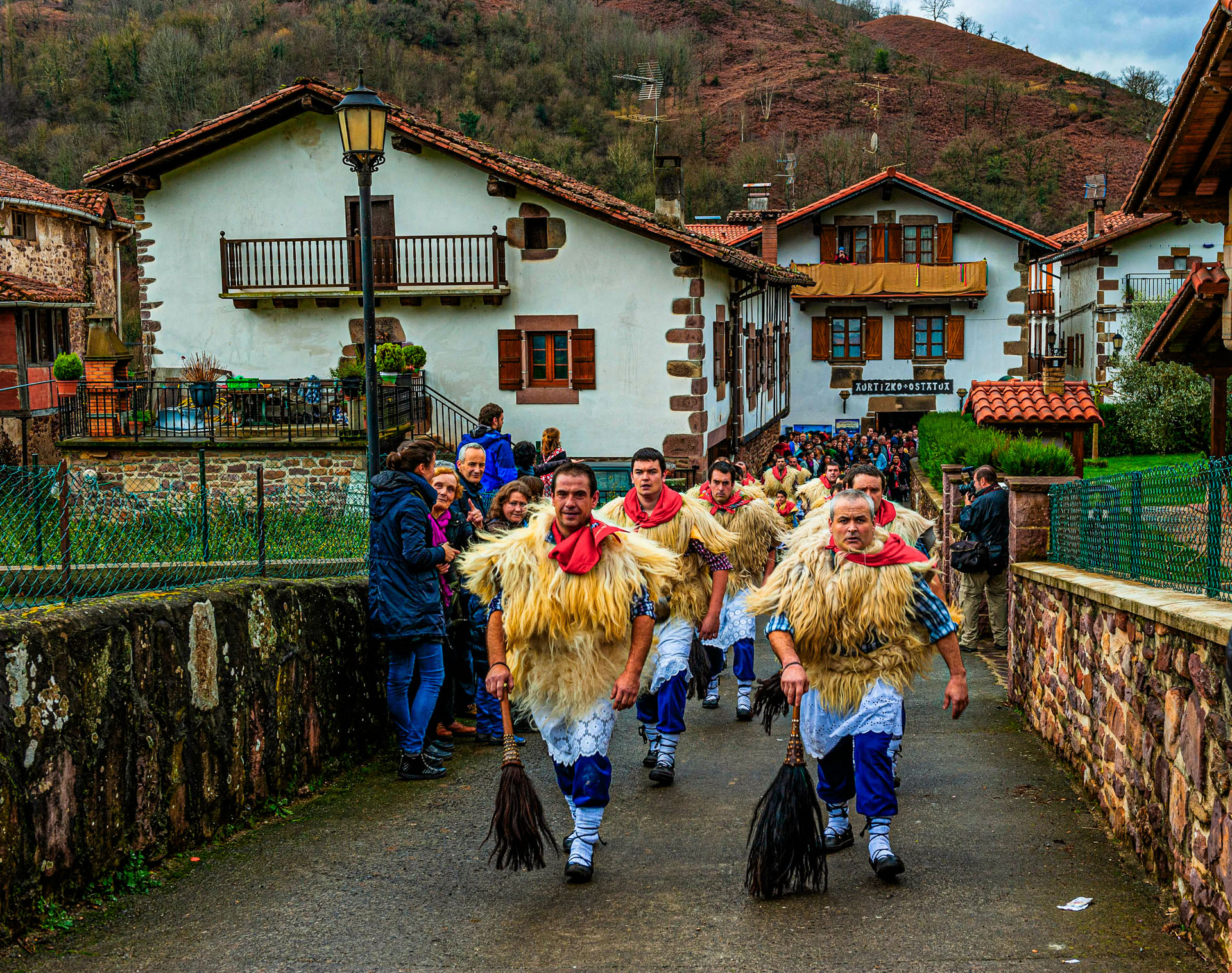
In Soule, masquerades enliven the villages from January to Easter, while pastorales, grand popular performances combining dance, theater and song, mobilize entire villages during the summer. The Herri Urrats festival, every second Sunday in May at Lake Saint-Pée-sur-Nivelle, brings together nearly 80,000 people to celebrate the Basque language and culture.
Discover also