


Basque villages:
Espelette, Sare, Ainhoa, Guéthary…
 Discover the sunny charm
of Basque villages
 Discover the sunny charm
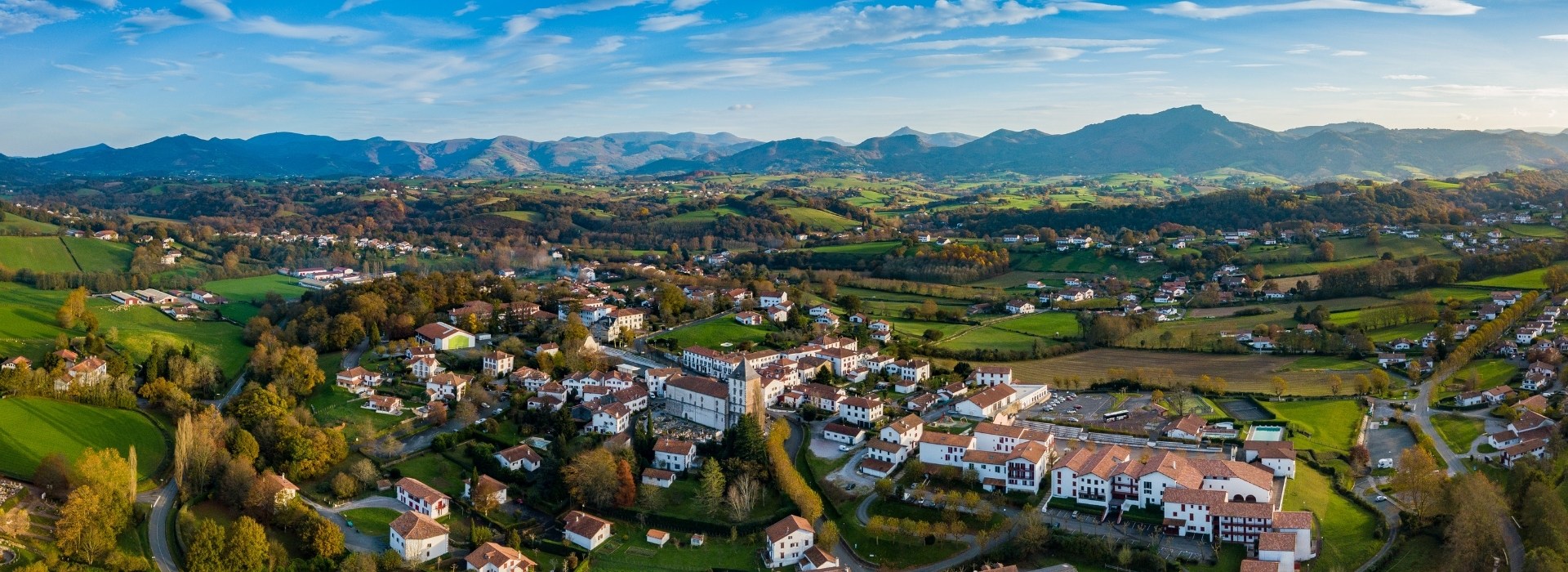
From our campsite in the Basque Country, setting off to discover Basque villages is an invitation to journey through time and tradition. Basque village tourism attracts thousands of visitors every year in search of authenticity and a real change of scenery. The village squares are laid out in the so-called “Labourdine” style, bringing together the town hall, the church and the pelota court in the same place. The term comes from the province of Labourd, in the heart of the French Basque Country. In these villages, cemeteries generally surround the church at the centre of the village. Alongside the church, the pelota court is the village’s key architectural feature, a testament to the importance of Basque pelota in local life.
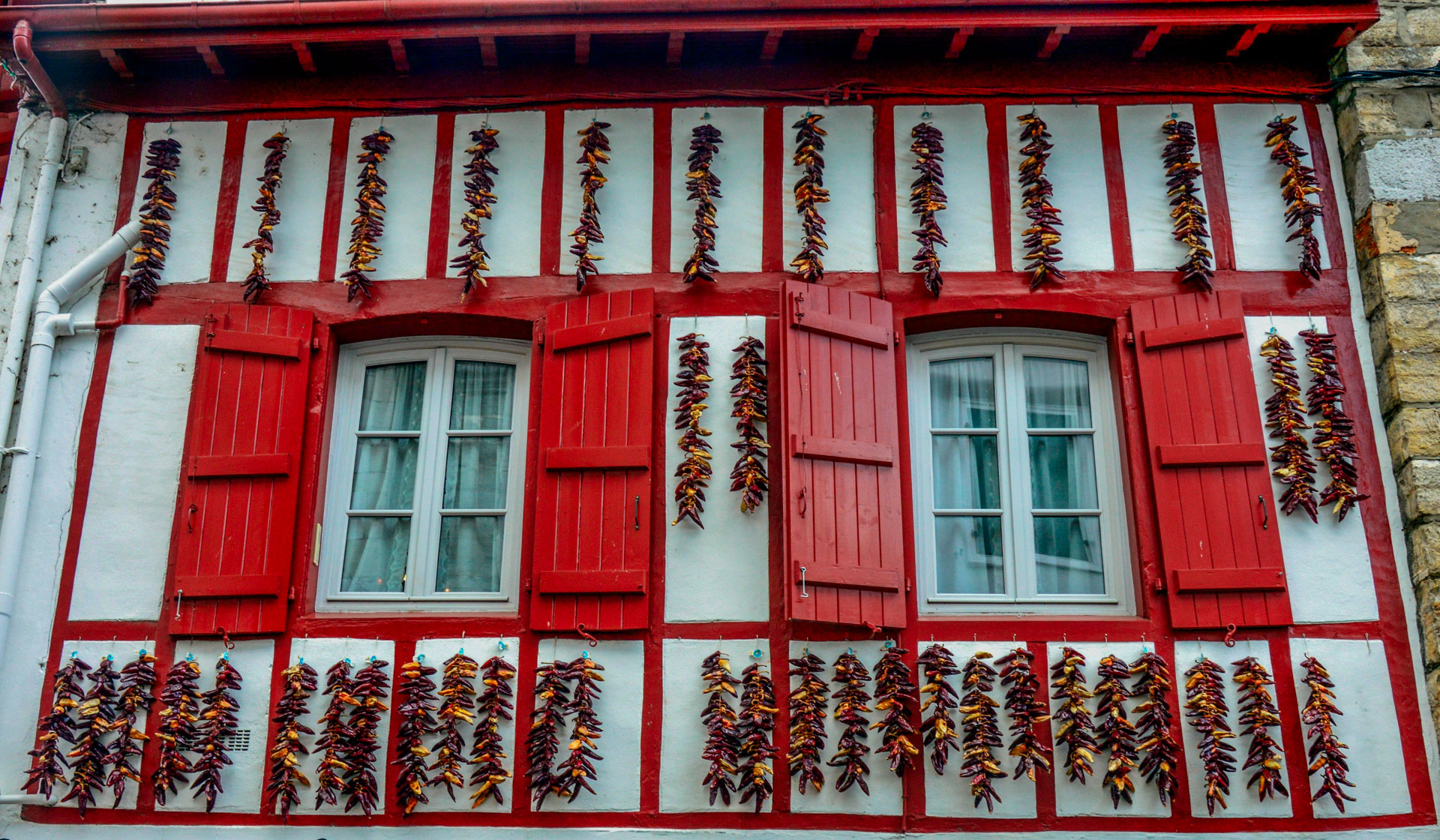
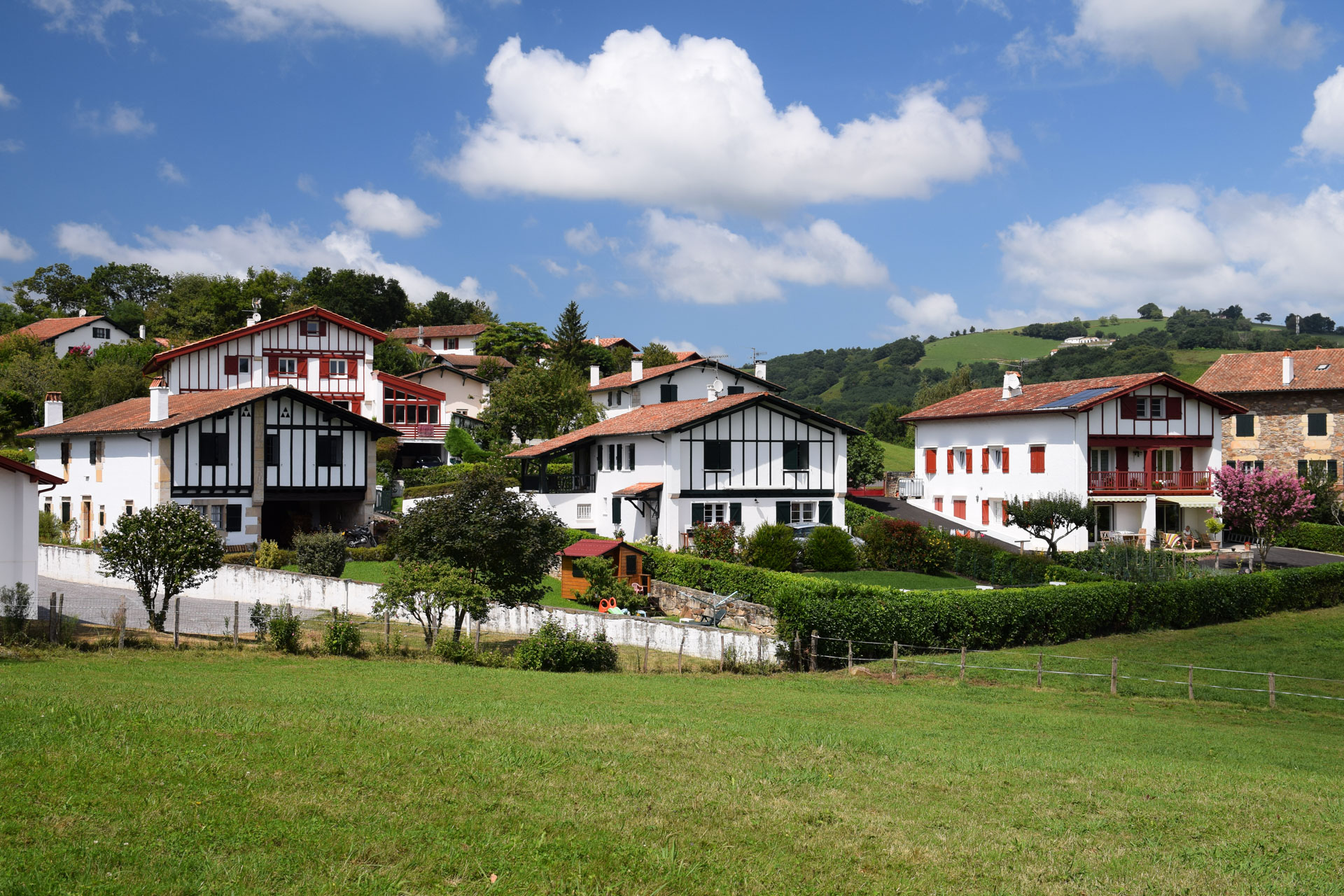
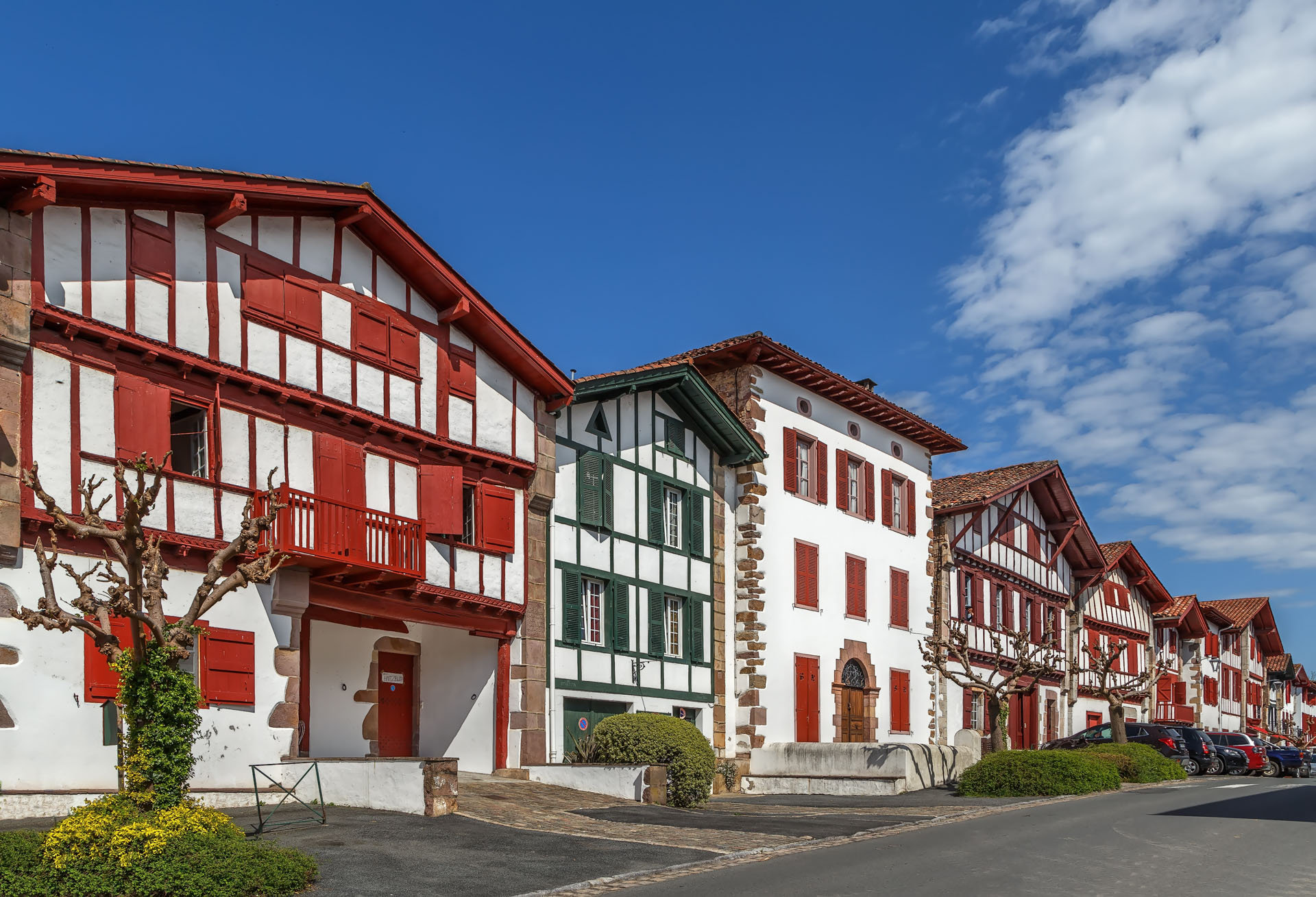
Homes in Labourdine style line the narrow lanes: these half-timbered houses with white façades highlighted in oxblood red or Basque green lend remarkable elegance to village centres. The Basque mountain house serves a dual purpose, sheltering animals on the ground floor and people upstairs, making the most of rising heat. The lowland house, meanwhile, impresses with its proportions, often worthy of a manor house. This architectural style can be found in Bayonne, Saint-Jean-de-Luz, Espelette, Saint-Jean-Pied-de-Port, Guéthary, Ainhoa and Sare. Today, many of these beautiful homes have been converted into self-catering cottages, helping to preserve them.
Espelette, the chilli capital
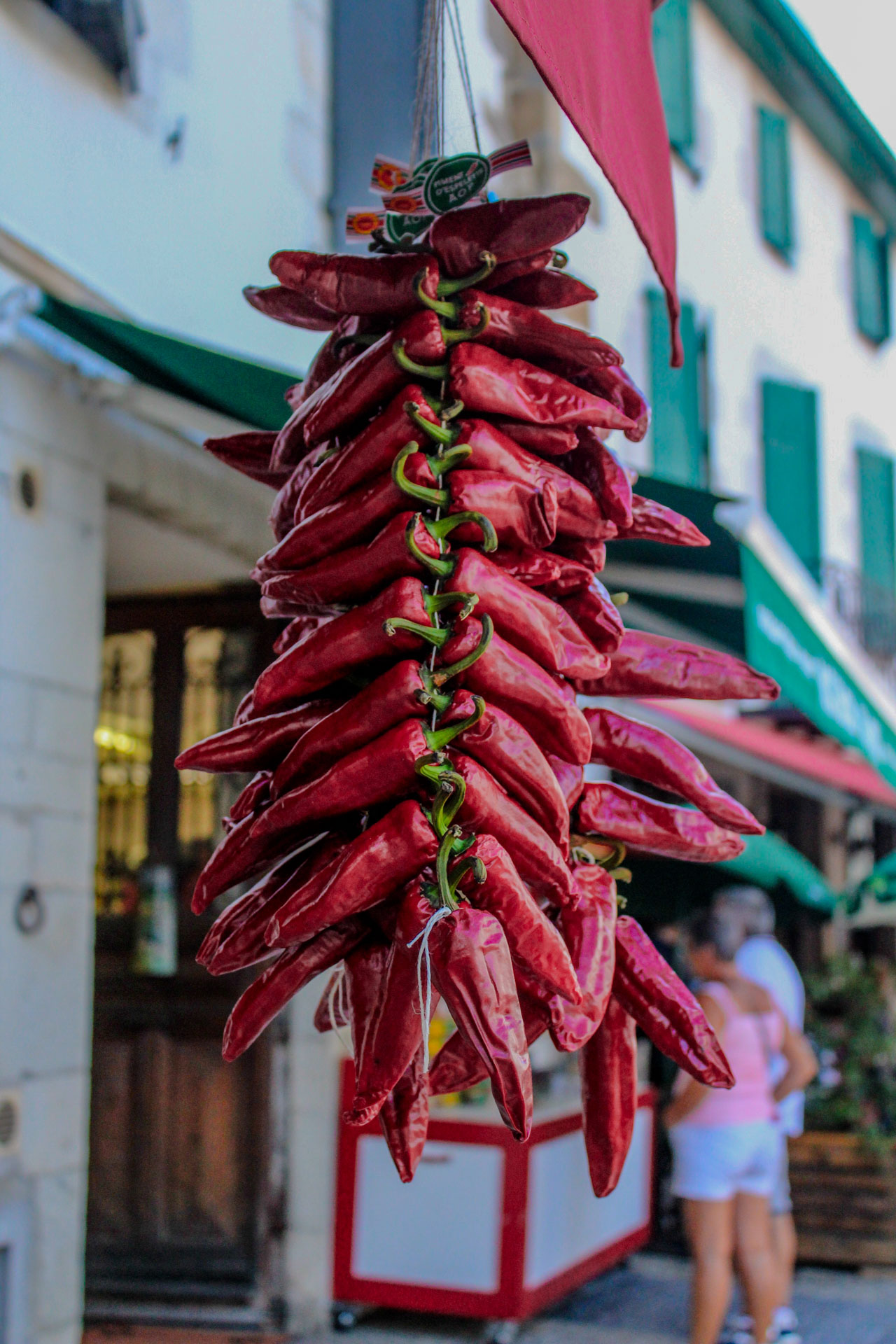
It’s impossible to explore the Basque villages without passing through Espelette, world-famous for its red chili pepper. From late summer onwards, the façades of the houses are adorned with garlands of dried chillies, offering a colorful spectacle. Introduced from America in the 17th century, Espelette chilli pepper is now the only French spice to hold a Protected Designation of Origin.
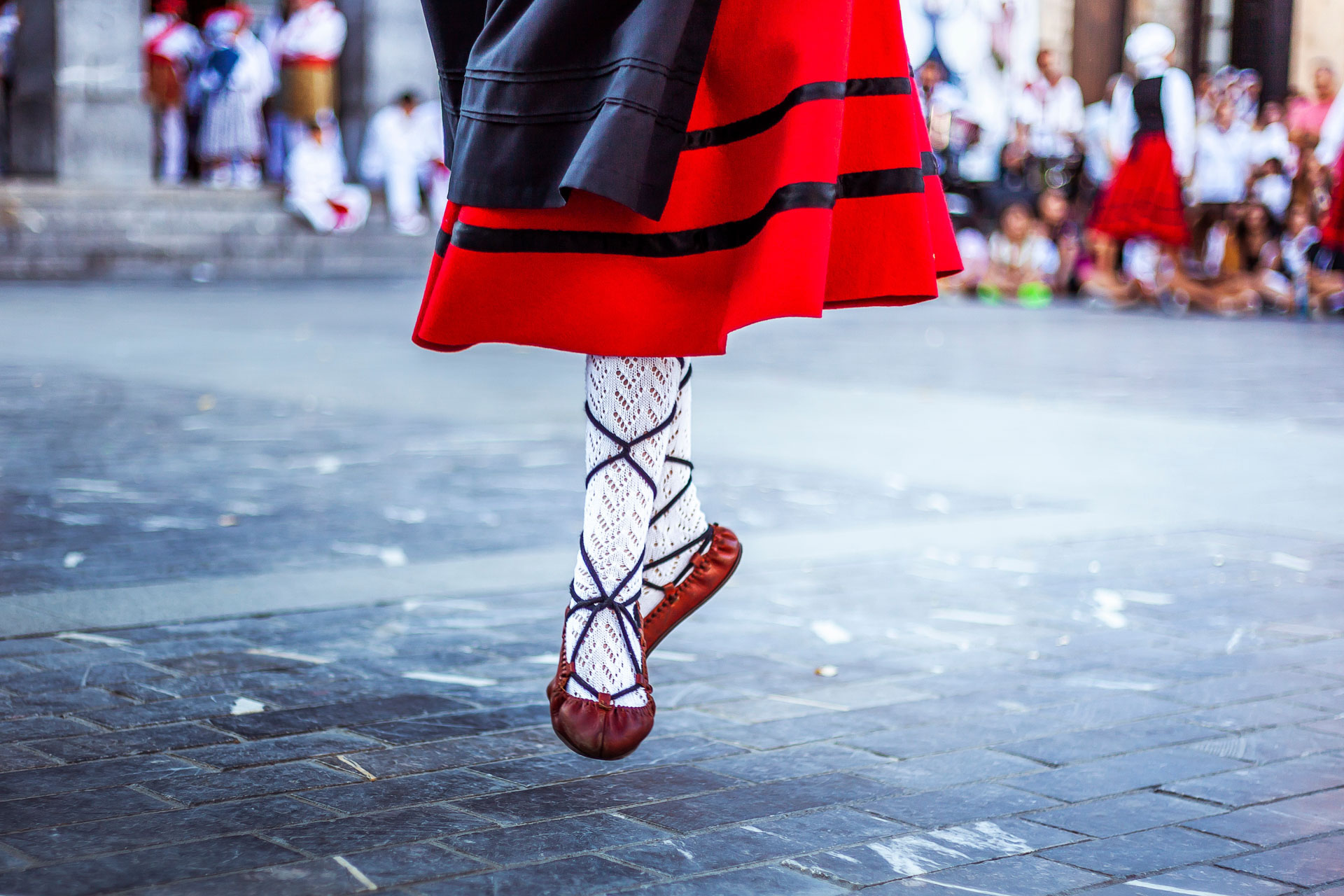
The village invites you to stroll through its picturesque streets lined with typical Basque houses. Don’t miss the Château des Barons d’Espelette, now home to the town hall and tourist office, as well as the 17th-century Saint-Étienne church, a listed historic monument. The Chilli Pepper Interpretation Centre reveals the origins and secrets of this centuries-old tradition. Every year, on the last weekend of October, the Chilli Festival celebrates this gastronomic heritage with entertainment, Basque dancing and festive meals.
Sare, at the foot of La Rhune
Listed among the “Most Beautiful Villages in France“, Sare nestles at the foot of the La Rhune and Axuria massifs, on the Spanish border. This authentic Labourd village has preserved its Basque soul, with traditional red-timbered houses lining picturesque lanes. Organised around its central square with its pelota court, church and town hall, it is a perfect example of Basque Country village architecture.
To discover the characteristic architecture of the province of Labourd, head to the Ortillopitz house. This 17th-century building immerses visitors in the history of the Basque Country and reveals the central place of the etxe (house in Euskara) in local culture. Saint-Martin church, whose interior decoration is listed by the Ministry of Culture, is also well worth a visit. Caving enthusiasts will love the prehistoric caves of Sare, where a scenographic trail reveals human occupation dating back more than ten thousand years. For breathtaking views over the region, take the La Rhune rack railway up to the summit at 905 metres above sea level.
Sare is also renowned for its Basque cake, a speciality you can enjoy at the village’s artisan pastry shops. Every Thursday morning from May to September, a producers’ market brings the main square to life.
Ainhoa, a bastide on the Way of St James
Just a few kilometres from Espelette, Ainhoa is one of the “Most Beautiful Villages in France”. Founded in the 13th century by monks, this bastide-street village was a welcome stop for pilgrims on the Way of St James to Santiago de Compostela. Just a stone’s throw from the Navarrese border, it has preserved its original medieval layout.
The village’s only street is a veritable open-air museum. Traditional Basque houses dating back to the XVIIᵉ century line up their white facades enhanced by red or green half-timbering, perfectly identical with a few exceptions: one house with light blue shutters and another with black half-timbering stand out from the rest. If you take a closer look at the facades, you’ll notice the inscriptions engraved above the doors, testifying to the history of each home.
Thechurch of Notre-Dame de l’Assomption, typical of the Labourdin style, reveals all the charm of Basque churches, with its wooden galleries and unique nave. Don’t miss the choir, featuring a sumptuous gilded wooden altarpiece with Spanish influences. The surrounding cemetery features discoidal stelae sculpted with symbols and geometric shapes, typical of Basque funerary tradition.
For hikers, a gravel path leads to the Notre-Dame de l’Aubépine chapel (Aranzazu in Basque), perched at 389 metres on Mount Atsulai. At the summit, reproductions of Basque steles dot the landscape, with the Xareta cirque and the Nivelle valley in the background. Allow 45 minutes for the ascent.
Guéthary, a fishing village facing the ocean
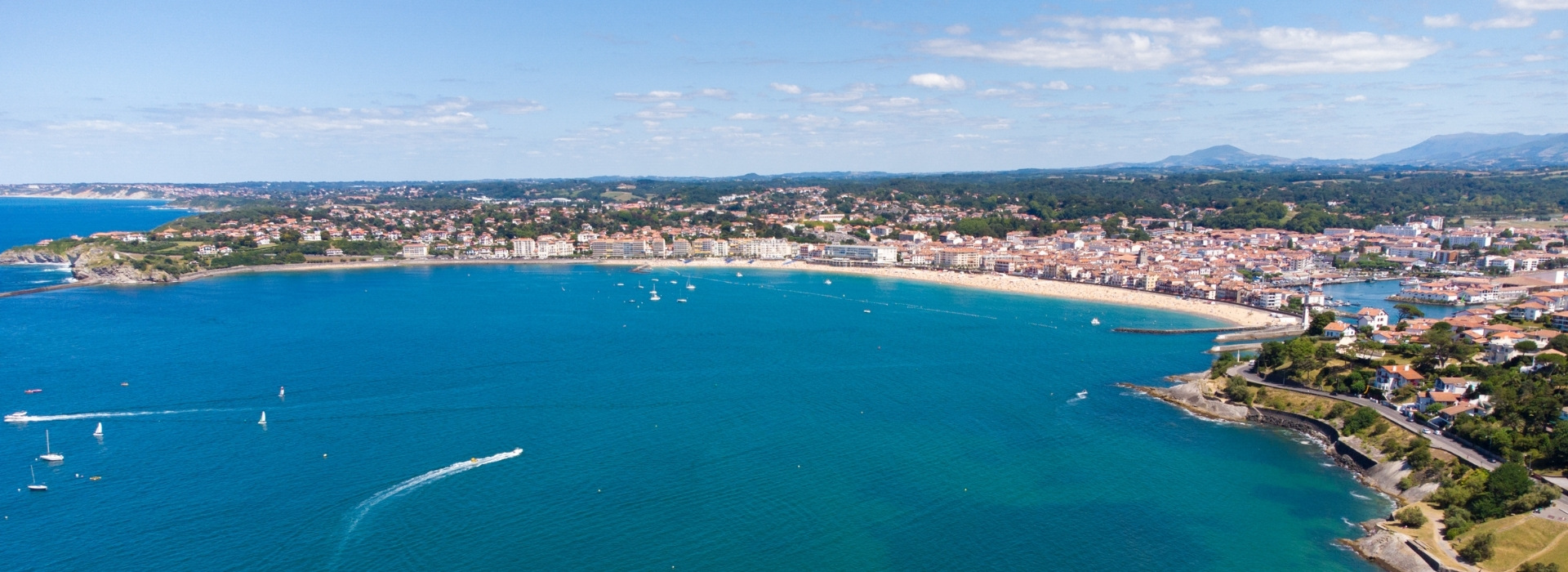
Nestled between Bidart and Saint-Jean-de-Luz, Guéthary is the smallest village on the Basque Coast. Formerly a whaling port, then a tuna and sardine fishing port, this fishermen’s hamlet has become a peaceful seaside resort with a gentle vacation atmosphere. Classified as a Site Patrimonial Remarquable, it maintains the Basque tradition in all areas: architecture, pelota, surfing, Basque dancing and singing.
The Place du Fronton, next to the beautiful town hall, is the heart of the town’s entertainment and community life. Local festivals, pelota games and shows take place here all year round. On the higher ground, theChurch of Saint-Nicolas, built in the XVIᵉ century and listed as a historic monument, offers the distinctive layout of Basque churches, with its raised choir dominated by wooden galleries.
Guéthary’s “Terrace” is a must for taking in the ocean views. In the shade of the tamarisks, you can watch surfers riding the famous Parlementia wave, renowned worldwide. The small sheltered harbour, with its colourful boats securely moored to the 29 rings on the slipway, has kept all its old-world charm. The Villa Saraleguinea houses Guéthary’s contemporary art museum, dedicated to the sculptor De Swiecinski, and also features remains from the Gallo-Roman period.
For hiking enthusiasts, the coastal path (25 km between Bidart and Hendaye) runs through the village and leads to the Cenitz hill, a protected natural area managed by the Conservatoire du littoral, offering a spectacular panorama over the Bay of Biscay.
Discover also